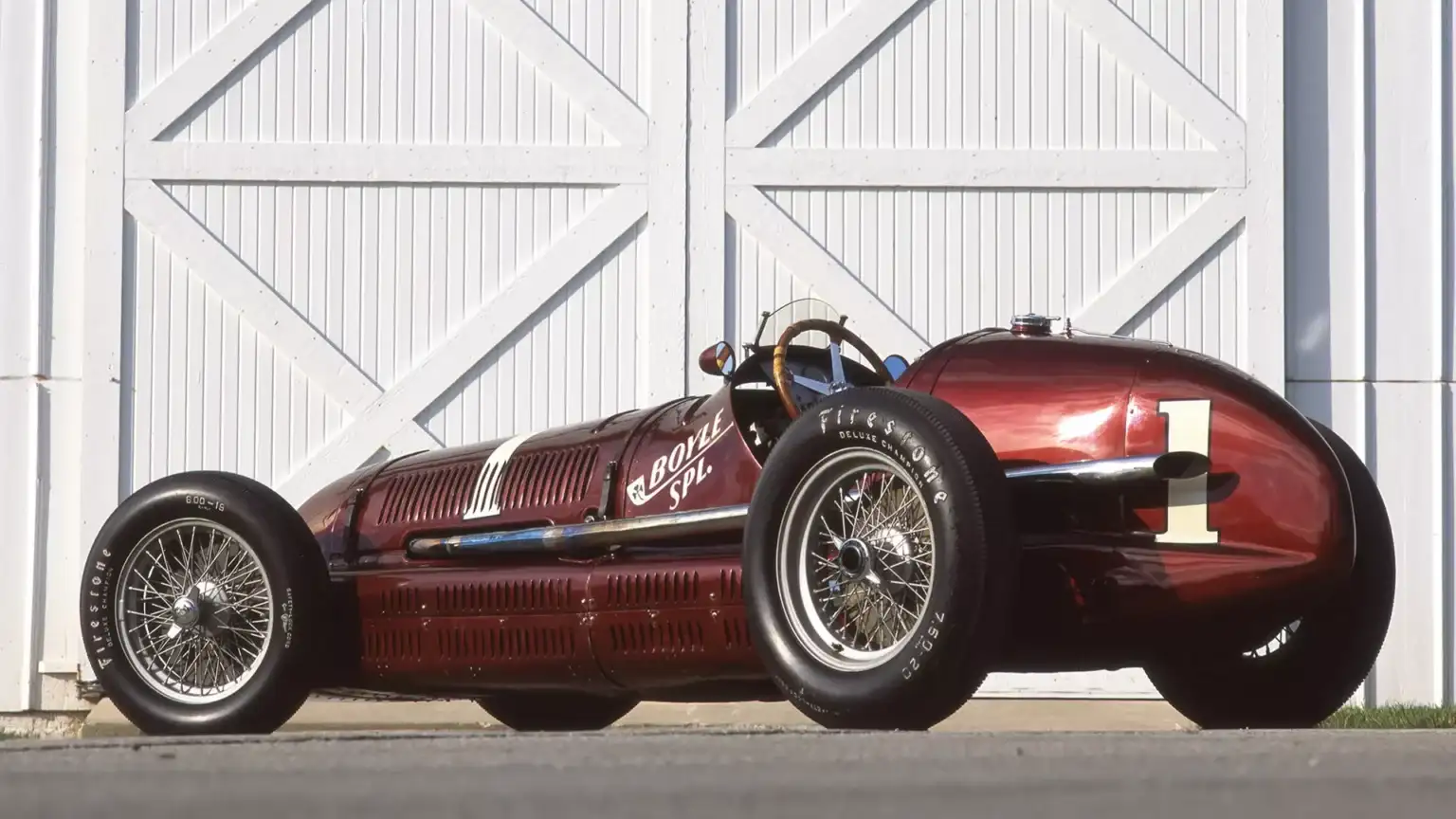
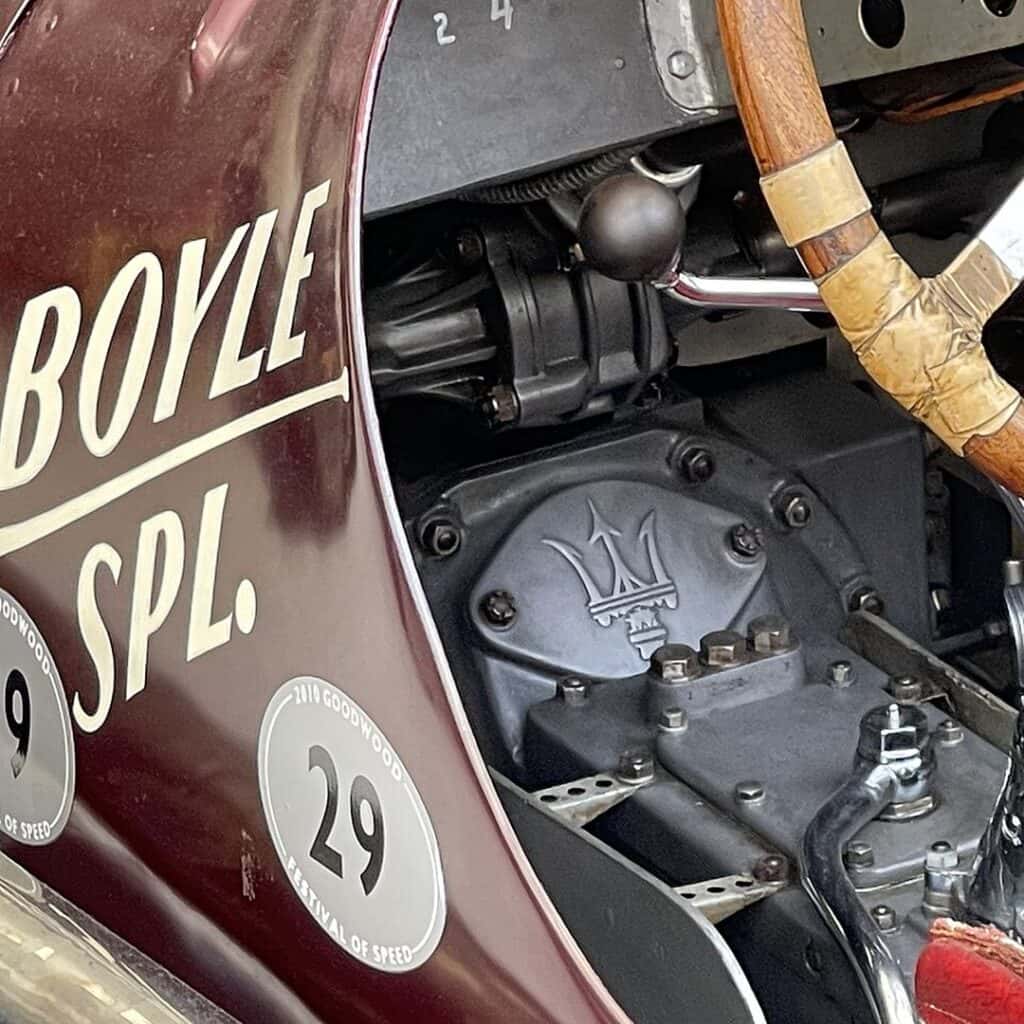
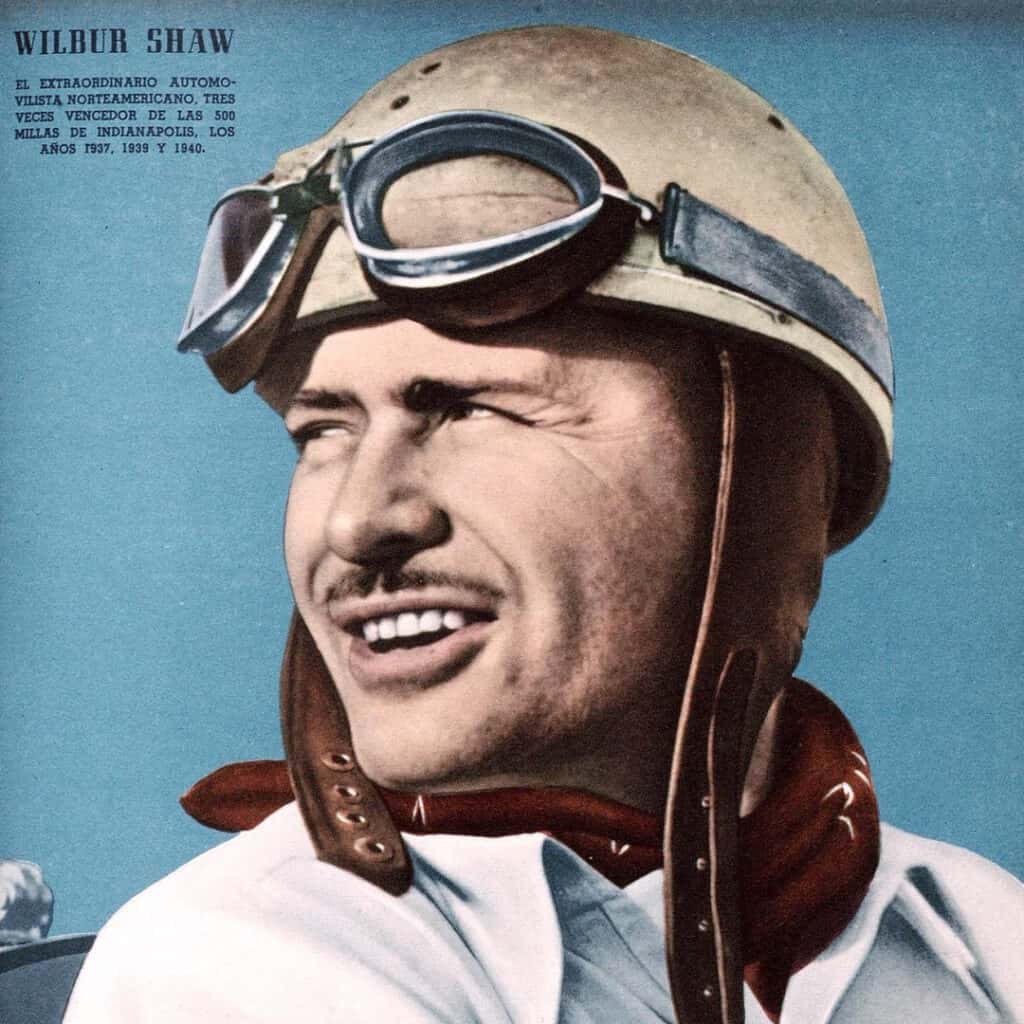
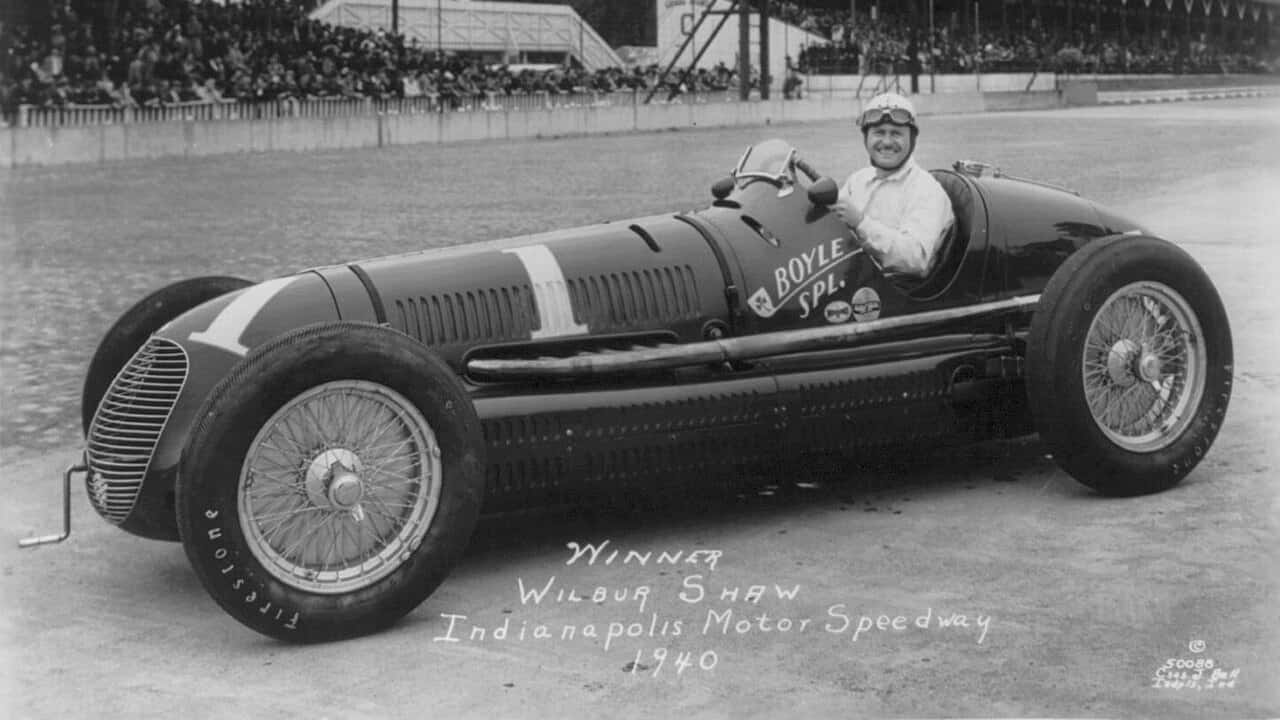
Maserati is the only Italian automaker to win the Indianapolis 500, with back-to-back victories in 1939 and 1940. Both came with American driver Wilbur Shaw at the wheel of the Maserati 8CTF, a car built for European Grand Prix racing.
That car still sits in the Indianapolis Motor Speedway Museum today. Here’s how a race car from Italy became an Indy legend.
The Car: Maserati 8CTF
The 8CTF arrived in 1938, a year after Adolfo Orsi bought Maserati from the founding brothers. Ernesto Maserati stayed on to design it, building a supercharged 3.0-liter straight-eight with a separate supercharger for each bank of four cylinders.
It debuted at the Tripoli Grand Prix in May 1938, fast but without a win. With war approaching and European racing winding down, the car found its greatest success across the Atlantic.
Maserati 8CTF · 1938
Supercharged 3.0-liter straight-eight
Peak output, 1939
366hp
Top speed
180mph
Weight (1,750 kg)
1720lb
Roots superchargers, one per four cylinders
2
*Period figures. Output ranged from about 350 to 366 hp as the engine was developed.
Our guide to who owns Maserati covers the Orsi years and every owner since.
Wilbur Shaw and the “Boyle Special”
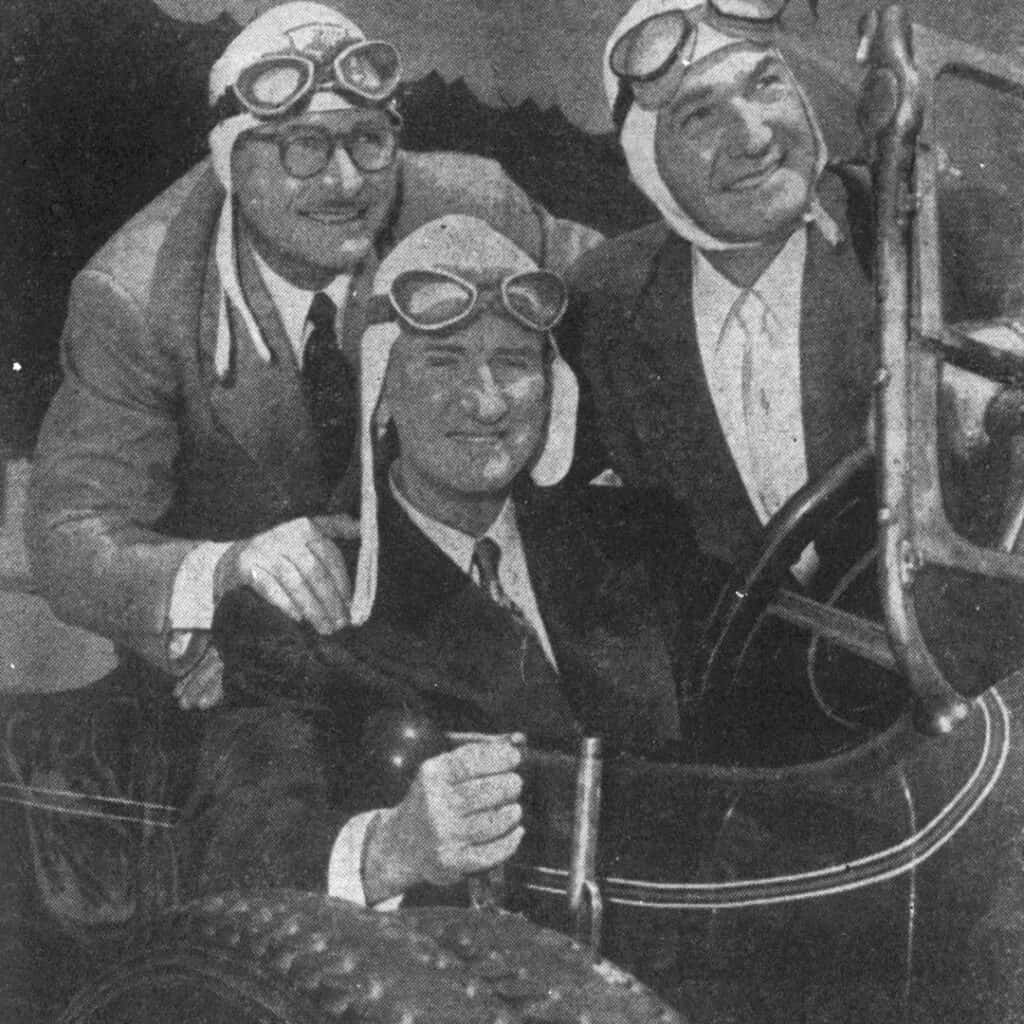
Wilbur Shaw was born in Shelbyville, Indiana, and had already won the Indy 500 in 1937. Racing for team owner Mike Boyle, he took an 8CTF entered as the Boyle Special to Indianapolis.
Shaw won the 1939 race in it. A year later he won again, becoming the first driver in history to win the Indy 500 two years in a row.
May 1938
Grand Prix debut
The 8CTF first races at the Tripoli Grand Prix.
1939
First Indy win
Shaw wins the Indy 500 in the Boyle Special.
1940
Back to back
The first driver ever to win two Indy 500s in a row.
1941
So close to three
Leading on lap 152 when a faulty wheel fails.
1945
Saving the Speedway
Shaw finds the buyer who rescues Indianapolis.
1941: The Wheel That Stopped a Three-Peat
On race morning in 1941, a fire swept through the Speedway’s garage area, destroying one car and delaying the start. Shaw’s crew had chalked “USE LAST” on an out-of-balance wheel, and firefighters’ hoses are believed to have washed the warning off.
Shaw was leading on lap 152 of 200 when his car lost control on the main straight and hit the outside wall. He was drenched in fuel and briefly unable to move, but the fuel never ignited.
A win would have made him the first driver to take three Indy 500s in a row, and the first to win four overall. More than 80 years later, no driver has won three straight.
The Man Who Saved the Speedway
During World War II, Firestone hired Shaw to test tires at the Indianapolis Motor Speedway, which had been padlocked for the war. He found it overgrown with weeds, and owner Eddie Rickenbacker, the World War I flying ace, planned to tear it down for a housing subdivision.
Shaw wrote to the major carmakers looking for a buyer, but each wanted the track as a private test facility. Then he met Tony Hulman, whose family business made Clabber Girl baking powder, and Hulman bought the Speedway for $750,000 in November 1945.
Hulman made Shaw president, and the crowds grew year after year until Shaw’s death in 1954. Maserati’s two-time winner helped make sure there was still an Indy 500 to win.
Where Is the Boyle Special Today?
The same car won both races, and it now sits in the Indianapolis Motor Speedway Museum, inside the track Shaw helped save. It has also returned to the Speedway for historic laps on race morning.
The museum’s records show how dominant it was. Shaw started third in 1939 and second in 1940, and in the second win he led 136 of the 200 laps.
Maserati remembered Indianapolis on the road, too. The Maserati Indy, a Vignale-designed V8 grand tourer built from 1969 to 1975, was named for those victories.
Maserati’s Racing Legacy Today
The MCPura still carries “MC” for Maserati Corse, the brand’s racing division. Building on the MC20, it continues Maserati’s motorsport-inspired approach with a carbon-fiber chassis, aerodynamic design, and lightweight construction. Our MC20 to MCPura guide explores how the supercar evolved.
At its heart is the 3.0-liter twin-turbo Nettuno V6, producing 621 hp. Its Formula 1-derived pre-chamber combustion system uses twin spark plugs to improve combustion efficiency and performance. This technology is central to the engines Maserati uses across its performance lineup.
That racing influence extends beyond the MCPura. The Maserati Trofeo range brings enhanced power, sharper handling, and performance-focused engineering to models such as the Grecale and GranTurismo, connecting everyday driving with the brand’s motorsport heritage.
the only Italian automaker to win it. Italian company Dallara builds the chassis used in the race today, but it doesn’t make the engines or build road cars.