If you shopped a Maserati MC20 and came back to find it gone, nothing was discontinued out from under you. The car is still built in Modena, still powered by the same Nettuno V6, and still sold as a coupe and a Cielo convertible. In 2025,Maserati renamed it to MCPURA — and gave it a mid-cycle refresh at the same time. This is what actually changed.
Why the name changed
“MC” has meant Maserati Corse since the MC12. That part stayed. “Pura” is the new half — a reference to purity, and to a car Maserati chose not to complicate. It arrives with no hybrid system, no electric variant and no added weight, at a moment when most of the segment went the other way.
The rename also does housekeeping. Maserati now has a supercar family rather than a single car with suffixes: MCPura, MCPura Cielo, and the track-focused GT2 Stradale above them. The refresh borrows visibly from that GT2 program.
2021–2025
MC20
Launched the Nettuno engine and the Dallara-developed carbon tub. Coupe and Cielo. A leather-led cabin and softer front-end forms.
2026 onward
MCPura
Same tub, same engine, same performance. Sharper fascias, a larger diffuser, Alcantara throughout, new colors and badge finishes.
What Actually Changed
Front and rear fascias
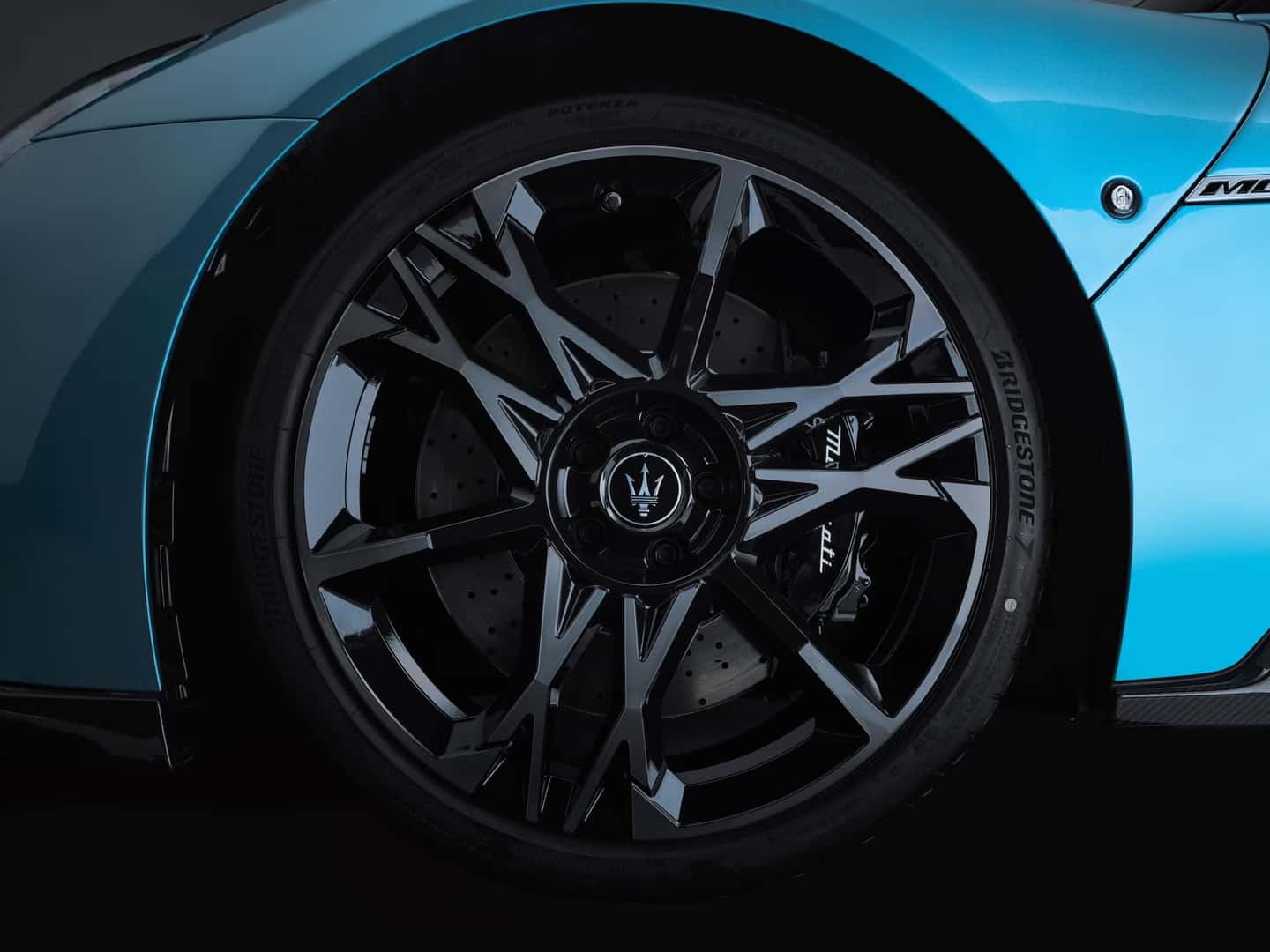
A more pronounced shark nose, a more trapezoidal grille aperture and a revised splitter working with updated underfloor aero. The rear gets rebalanced volumes and a larger diffuser.
An optional taller wing
Borrowed from the GT2 program, for buyers who want the car to read as the track-derived machine it is.
An Alcantara cabin
Most of the visible leather is gone, replaced by Alcantara on the seats, door panels and surrounds. The seats carry laser-etched detailing.
A flat-top steering wheel
A GT2 Stradale-derived wheel with a flattened top and bottom, improving the sightline to the cluster. Coupe buyers can add LED shift lights.
New colors and badging
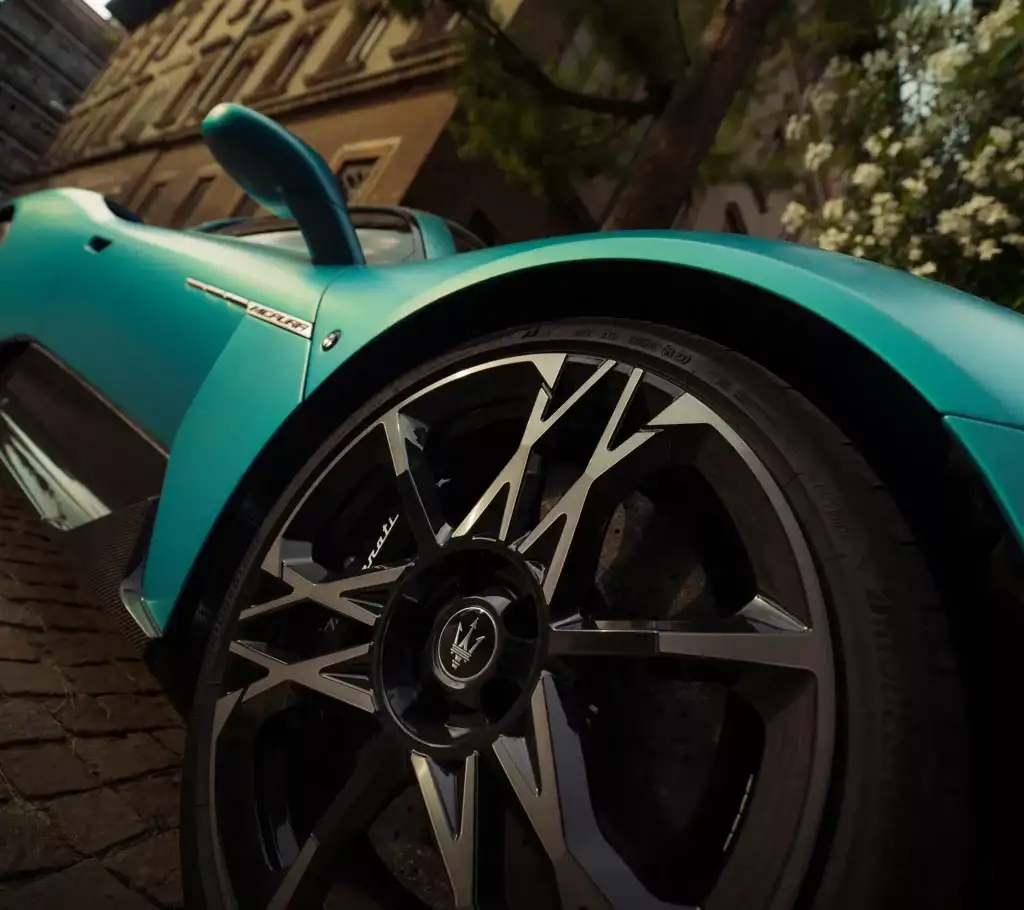
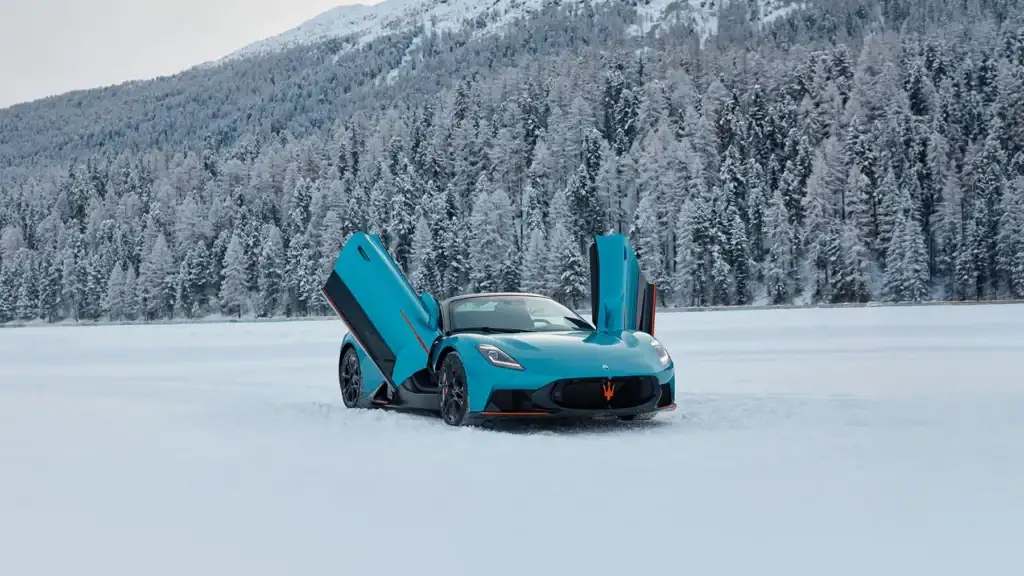
Devil Orange, Verde Royale and Night Interaction join the range, alongside the Ai Aqua Rainbow finish shown at launch. Trident badges get new accent treatments.
Aero validation, not power
Maserati put the revised bodywork through an extensive wind-tunnel program with Dallara. The gains are in aerodynamic behavior, not output.
What Didn’t Change
EngineNettuno Twin-Turbo V6
Max Power621 HP
Peak Torque538 lb-ft
0–60 MPHUnder 2.9 sec
Top Speed202 MPH
Transmission8-Speed Dual-Clutch, RWD
StructureCarbon Fiber Monocoque
Body StylesCoupé & Cielo
Figures are manufacturer-stated and vary by market and configuration. Confirm final specification with our product specialists before ordering.
Learn more about the MCPURA
Allocation for the MCPura and MC20 is limited, and Coupé and Cielo inventory changes weekly. Contact us and we’ll tell you exactly what’s on the ground and what’s allocated.
The Nettuno V6 was Maserati’s first in-house engine in two decades, and it uses a pre-chamber combustion system derived from Formula 1 practice — a secondary chamber that ignites first and drives combustion through the main chamber more completely. That is what produces 621 hp from three liters without hybrid assistance.
Three things are worth knowing. Your car was not replaced by a faster one — performance is unchanged, so the MCPura does not date an MC20 on capability. Service, parts and software support continue exactly as before, since the mechanical package is shared. And the MC20 is now a closed production run with a defined start and end, which is generally how supercars are valued over time.
Mechanically, yes. The MCPura is a mid-cycle refresh of the MC20 with a new name. It keeps the carbon tub, the Nettuno V6, the transmission and the performance figures, and changes the bodywork, interior materials and color range.
It wasn’t discontinued in the usual sense. After four years on sale the car was due a refresh, and Maserati used that update to rename it MCPura and align it with the GT2 Stradale and MCXtrema programs.
No. Maserati cancelled the battery-electric MC20 Folgore and has confirmed there are no plans for an electrified MCPura, citing low market demand for electric supercars.
It refers to purity — a mid-engine supercar with a combustion engine, rear-wheel drive and no hybrid system. “MC” continues to stand for Maserati Corse.
The Cielo is the convertible, using a retractable glass roof that switches between transparent and opaque. Both share the same engine and chassis, with the Cielo carrying additional weight for the roof structure.
Mechanically, yes. The MCPura is a mid-cycle refresh of the MC20 with a new name. It keeps the carbon tub, the Nettuno V6, the transmission and the performance figures, and changes the bodywork, interior materials and color range.
It wasn’t discontinued in the usual sense. After four years on sale the car was due a refresh, and Maserati used that update to rename it MCPura and align it with the GT2 Stradale and MCXtrema programs.
No. Maserati cancelled the battery-electric MC20 Folgore and has confirmed there are no plans for an electrified MCPura, citing low market demand for electric supercars.
It refers to purity — a mid-engine supercar with a combustion engine, rear-wheel drive and no hybrid system. “MC” continues to stand for Maserati Corse.
The Cielo is the convertible, using a retractable glass roof that switches between transparent and opaque. Both share the same engine and chassis, with the Cielo carrying additional weight for the roof structure.
Talk To A Maserati Product Specialist
Whether you’re configuring an MCPura, weighing a pre-owned MC20 or appraising the car you already own, we can walk you through it.