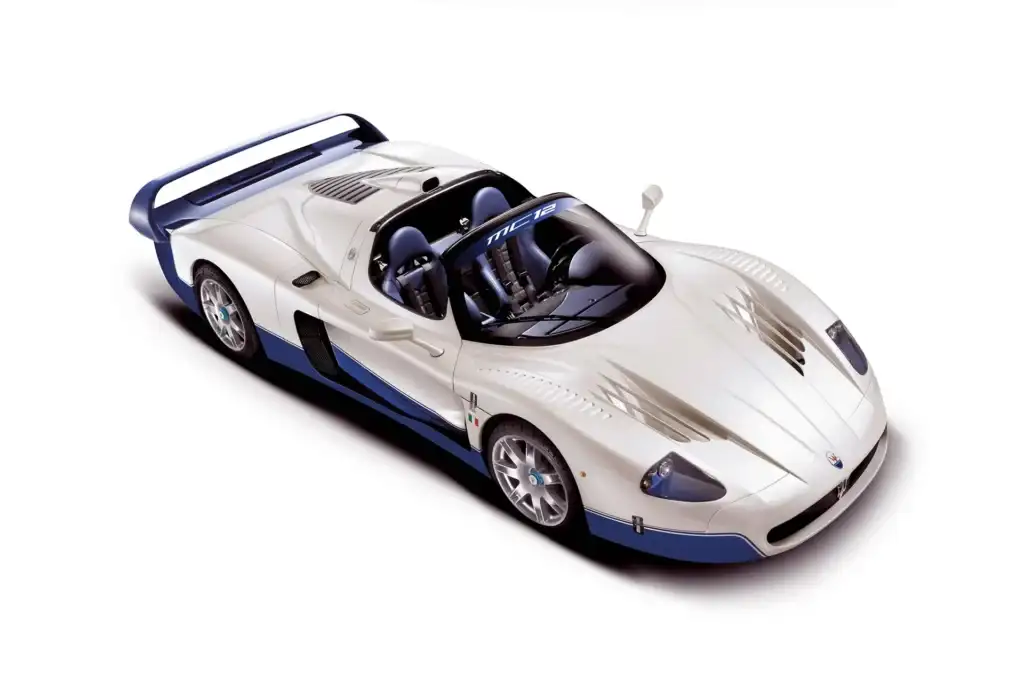
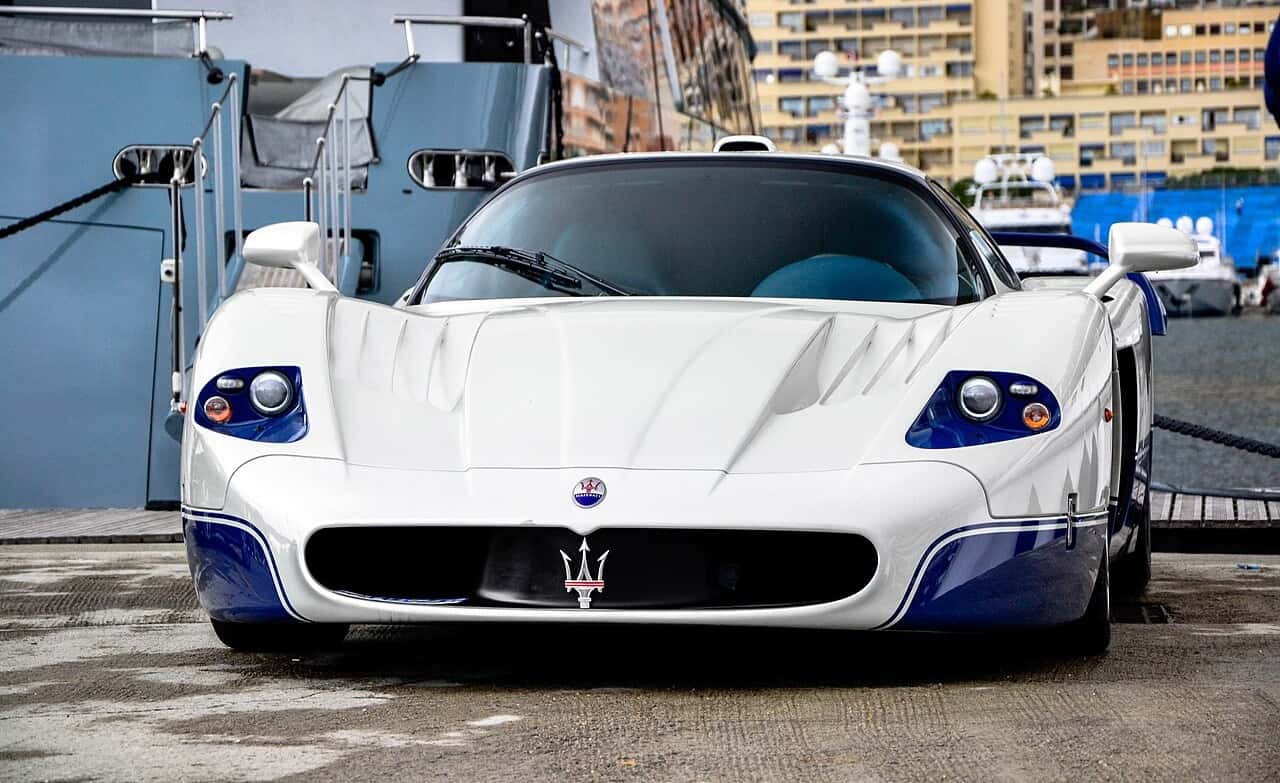
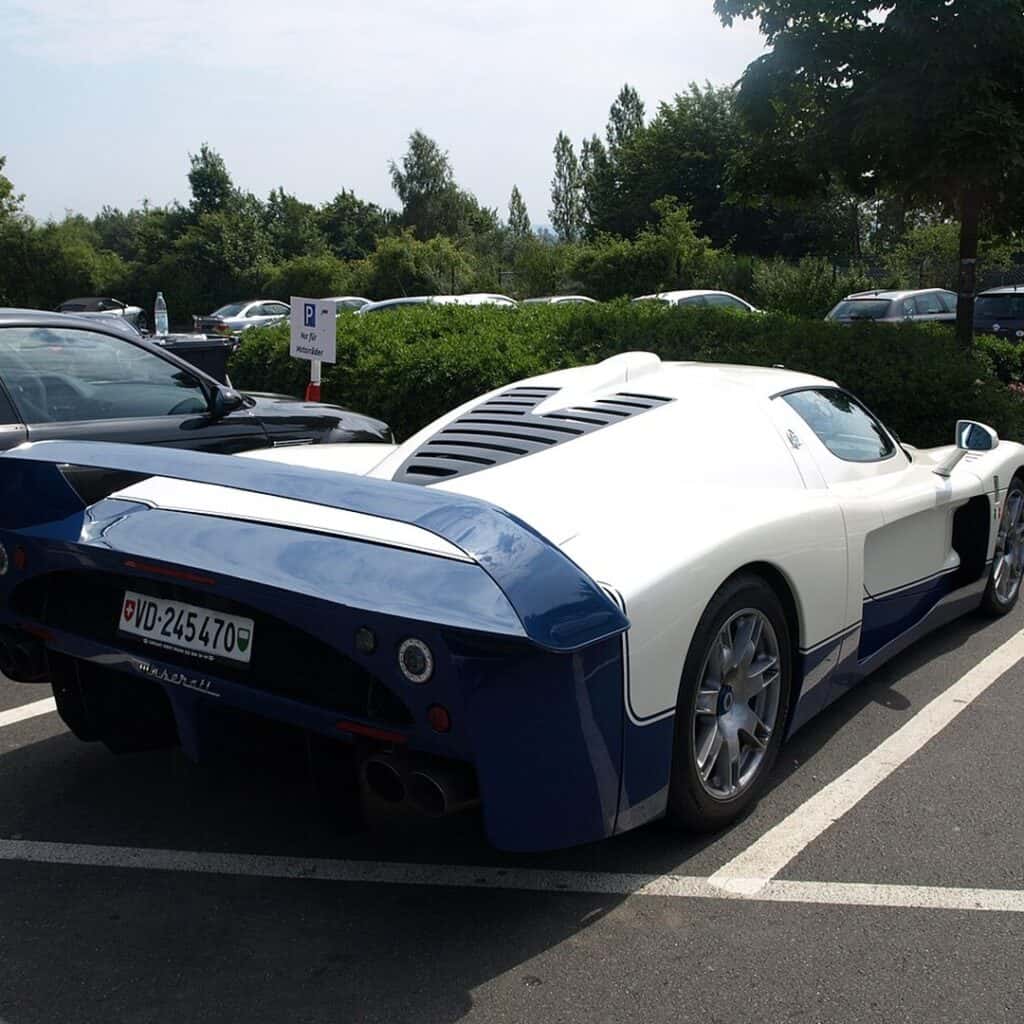
The Maserati MC12 is a limited-production supercar built so Maserati could go GT racing, and it became one of the most successful GT1 cars of its era. Only 50 road cars were made, and the race versions won championships every year from 2005 to 2010.
It also marked Maserati’s return to racing after 37 years away. Here’s how a car built to satisfy a rulebook ended up dominating the series.
Maserati MC12 Specs
The MC12 was built on the chassis and V12 of the Enzo from its sister company at the time, Ferrari. Maserati gave it its own carbon-fiber body, tuning and gearbox calibration, and the windshield is the only exterior part the two cars share.
Maserati MC12 · 2004–2005
6.0-liter V12, mid-engine, rear-wheel drive
At 7,500 rpm
621hp
Top speed
205mph
0–62 mph
3.8sec
Length
202.5in
Rear wing width
79in
Road cars built for customers
50mph
*Manufacturer figures for the original road car. The second batch of 25 was shortened by about 6 inches to meet updated rules.
It’s a big car by any measure: longer and wider than a Hummer H2, with no rear window and a targa roof that can’t be stored inside. A button raises the front end to clear speed bumps and driveway ramps.
Why Maserati Built the MC12
To race in the FIA GT Championship, a manufacturer had to build at least 25 road versions of its race car. Maserati developed both at once, in a program led by Giorgio Ascanelli.
The race car was code-named MCC, for Maserati Corse Competizione, and the road car MCS, for Maserati Corse Stradale. Both names gave way to MC12 before launch.
Michael Schumacher tested the race car often at Ferrari’s Fiorano circuit, but its chief test driver was Andrea Bertolini. He went on to race the MC12 himself and won three FIA GT drivers’ titles in it.
Designed in the Wind Tunnel
The MC12’s shape wasn’t drawn first and tested later. It was developed in the wind tunnel itself, starting from an idea by Giorgetto Giugiaro, with Frank Stephenson handling most of the final styling.
Every surface of the carbon-fiber body was tuned for downforce. The underside is completely smooth, diffusers in the rear bumper pull the car toward the road, and the scoop above the cabin that feeds the V12 is why the car sits so tall.
Even its size came from the tunnel, because the longer, wider body generates more downforce. At 125 mph, two-thirds of that downforce presses on the rear wheels, helped by a wing about 79 inches wide but just over an inch thick.
The MC12’s Livery and Interior
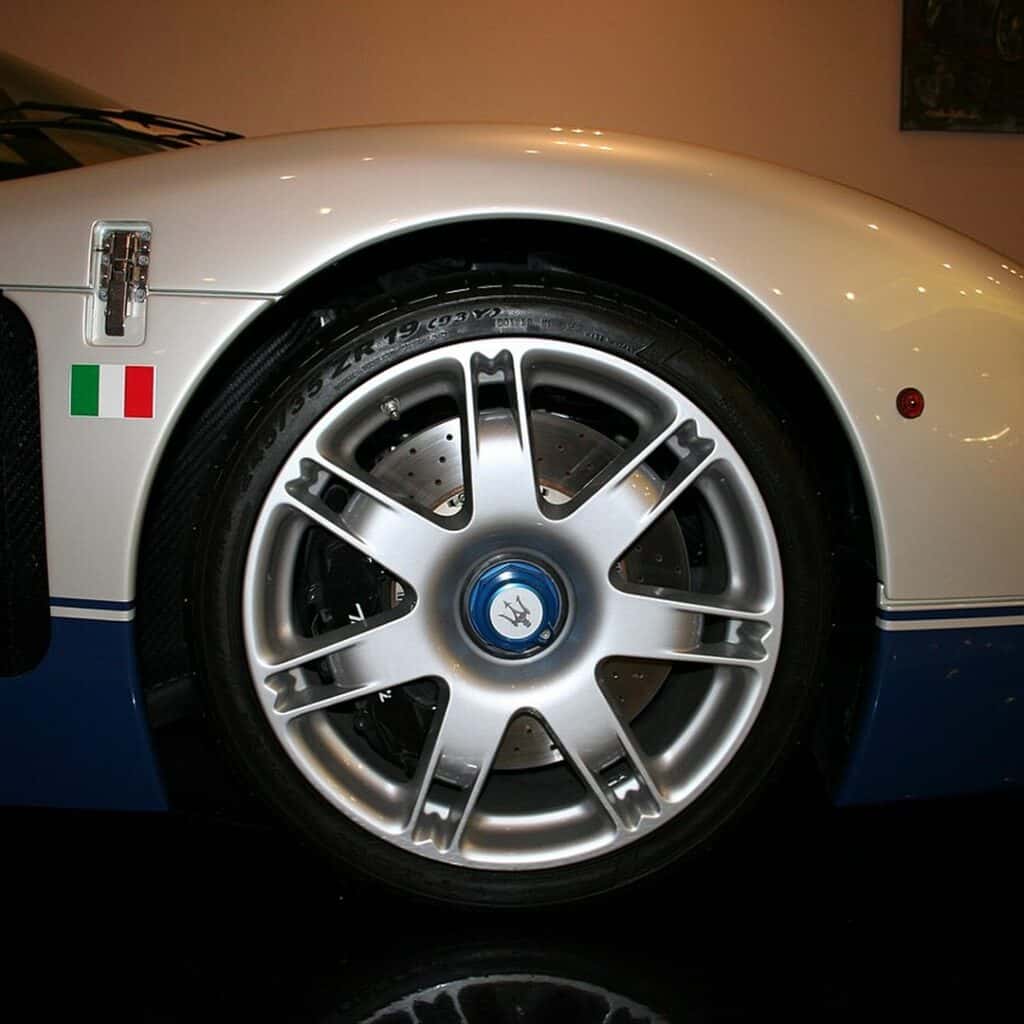
Every MC12 came in white and blue, a tribute to the Camoradi team that raced Maserati’s Tipo 60 and Tipo 61 Birdcage in the early 1960s. Custom colors were available at extra cost.
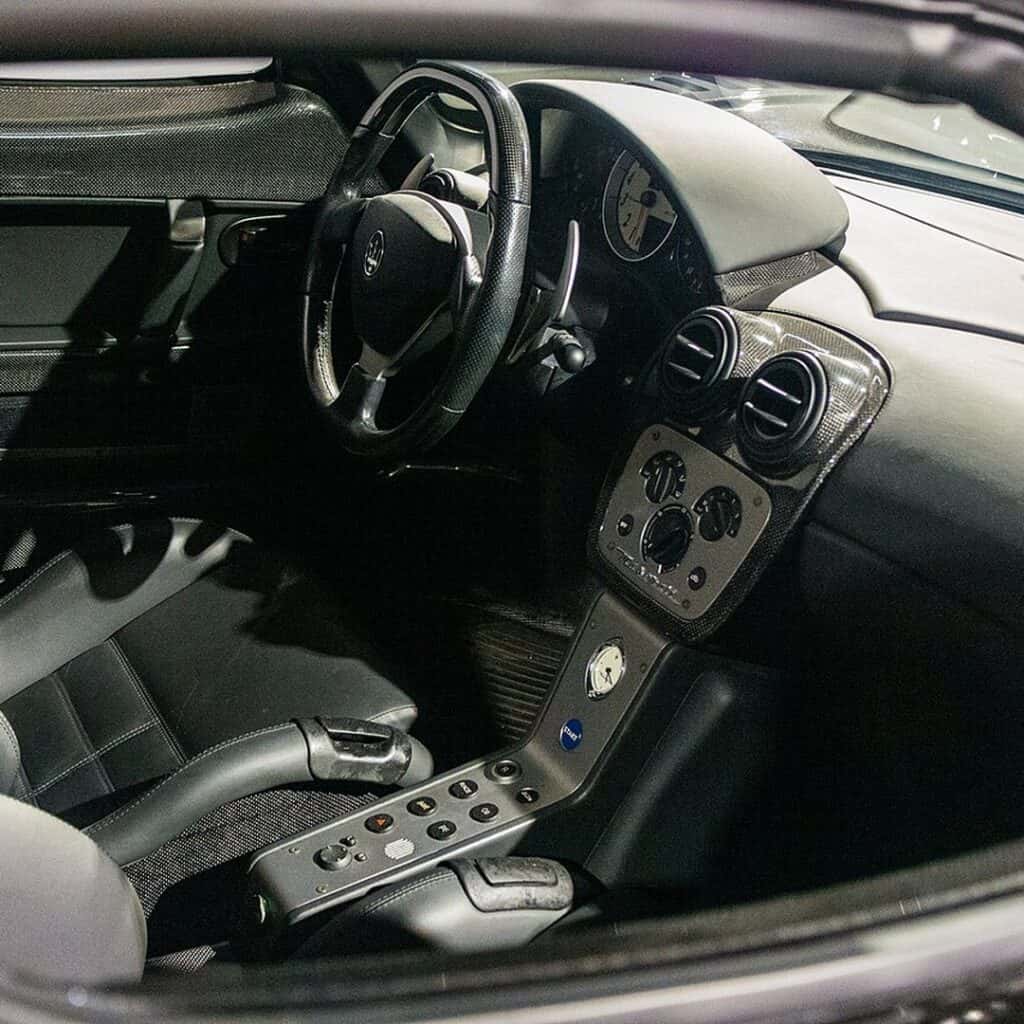
Inside, it pairs carbon fiber with blue leather and a silver material called Brightex, reportedly too expensive for the fashion industry. There’s a classic Maserati oval clock and a blue start button, but no radio at all.
Too Big for Le Mans
The MC12’s size made it a problem for organizers. It exceeded both the length and width limits for Le Mans-sanctioned series, and even after Maserati shortened the nose by nearly 8 inches, it was still 2.6 inches too wide.
The American Le Mans Series let one MC12 race in 2005 as a guest, after rival teams objected that a crash with the big Maserati could cost them their own Le Mans entries. It couldn’t score points, carried a weight penalty and never raced at the 24 Hours of Le Mans itself.
The MC12’s FIA GT Title Run
The MC12’s racing career started under protest. At its 2004 debut at Imola, the FIA wouldn’t let it score points while its homologation was still being debated, so its second- and third-place finishes counted for nothing.
A few races later, Andrea Bertolini and Mika Salo gave it its first win at Oschersleben. By the season finale in Zhuhai, the FIA had cleared the MC12 to score points, and it won again.
2004
First wins: Oschersleben & Zhuhai
2005
Manufacturers’ CupTeams’ titleSpa 24 Hours
2006
Teams’ titleDrivers’ titleSpa 24 Hours
2007
Manufacturers’ CupTeams’ titleDrivers’ title
2008
Teams’ titleDrivers’ titleSpa 24 Hours
2009
Teams’ titleDrivers’ title
2010
GT1 World Teams’ titleGT1 World Drivers’ title
Vitaphone Racing won the teams’ title with the MC12 every year from 2005 to 2010, the last of them in the first FIA GT1 World Championship. In 2006, its MC12s clinched that title while carrying weight penalties of 85 and 105 kilograms, about 190 and 230 pounds.
The MC12 also gave Maserati its first Spa 24 Hours win in 2005, then won the race again in 2006 and 2008.
From the MC12 to the MC20 and MCPura
“MC” has stood for Maserati Corse since the MC12, and the MC20 carried it forward as the MC12’s spiritual successor. Its update, the MCPura, makes the same 621 hp, now from Maserati’s own Nettuno V6, as our MC20 to MCPura guide explains.
Like the MC12, it led to a race car, and the MCPura brings parts of it back to the road: an optional taller GT2 wing and a flat-top steering wheel from the GT2 Stradale.
The MC12 began as a way to satisfy a rulebook and ended up as one of the most successful GT cars of its era. Only 50 were ever built for the road, but every MCPura still carries its initials.”
Maserati Corse, then and now
The MC12’s story continues in the MCPura
Same MC badge, same 621 hp, now from a Nettuno V6. Ask us about MCPura availability, or find a pre-owned MC20.
It uses the chassis and V12 engine of the Ferrari Enzo, but Maserati designed its own body and tuned it as a Maserati. Only the windshield is shared on the outside.
Race versions won six straight FIA GT teams’ titles from 2005 to 2010, along with drivers’ titles, two Manufacturers’ Cups and three Spa 24 Hours victories.